





















Printing systems devour consumable media like a bear during salmon season. Ensuring your labels match your application can improve accuracy, lower handling costs and make your warehouse more efficient.
Barcode tags and labels come in all sizes, shapes, materials and adhesives. They can be custom made to integrate with package design or to withstand extreme conditions.
Regardless of you labeling needs, investigating a few basic areas can help you pick the right label.
The Printer
The question may be obvious; direct thermal or thermal transfer? Direct thermal does not require a ribbon, but uses special heat-sensitive paper, turning black when exposed to heat. Thermal transfer printing uses high-carbon, thermal transfer ribbons. The ribbon passes between the print head and the label, transferring the ink onto the label. Knowing your printing method is imperative for selecting the right label material, or facestock, for your application.
Labels and Tags
A barcode label consists of the facestock, adhesive and release liner. Peeling off the release liner exposes the adhesive on the back of the face stock…then you stick in on.
With some applications, you may need to avoid contact of the adhesive to the product. Enter the tag. Tags, or tickets, are generally attached using a hole in the tag. This keeps the product free of any adhesive or glue and reduces waste by eliminating the release liner.
Label Material
Here the basic question is: paper or synthetic? Paper is economical and acceptable for thousands of applications. But when the going gets tough, the tough go for synthetic.
Synthetic facestocks offer a wide variety of material, each suited for a particular application or environment. Key questions for determining the right synthetic label are:
- What is the surface label to which the label is applied?
- What type of environment will the label be exposed to?
- What is the “journey” of the product once the label is applied?
- How long does it need to last?
With this information in hand, the experts at PEAK Technologies are best able to guide you to the right material for your particular application.
Adhesive
There are lots of choices when it comes to adhesives. Of course, if you use a tag this is one decision you don’t have to make. But to make your label stick, you have some choices. The broad categories are permanent, removable, repositionable, freezer-grade and patterned.
- Removable adhesive can be removed, but only once. The glue can become stronger the longer it is on a surface. Over time, it becomes more like a permanent adhesive. Labels with this component will stick to surfaces well and are not easy to remove.
- Repositionable adhesive allows the label to be removed and reapplied to a broad range of surfaces.
- Freezer-grade adhesives, as the name suggest, are designed for use within certain low temperature environments.
- Patterned adhesive leave certain parts of the label free of adhesive. This is frequently delicate surfaces or valuable items, ensuring no adhesive residue is left on the product.
Specialty Labels
Specialty labels can be designed for specific applications; examples include:
- Tamper evident labels are designed for extra security. Once applied, the label cannot be removed and reapplied.
- “Void” labels leave part of the adhesive behind showing they have been removed.
- Destructible vinyl labels will break apart into little pieces.
- Jewelry labels come in special shapes, ideal for labeling small items. An example is the dumbbell label, also called a butterfly label.
- Self-laminating labels are also called cable labels. They have a white printable area and a longer clear part to wrap around the cable and the printed area.
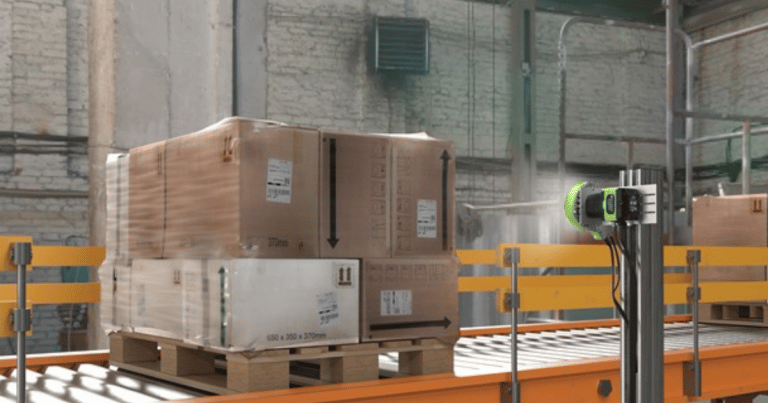
- RFID Labels: have an RFID chip imbedded on the back side of the label. This chip can contain much more information than a traditional barcode. RFID also allows an entire pallet of product to be scanned at one pass through the scanner.
The variety of specialty labels goes on and on: there are opaque, piggyback, retro-reflective, and even aluminum and steel barcode labels.
This is just a brief overview of point to consider when choosing a label media for your application. For more information or questions, contact us at 800-926-9212 or email us at info@peaktech.com.